How does a misquoted drapery job hold up at invoicing? Custom bedroom drapery costs between $300 and $700 per fabric width installed in high-end residential projects. This price assumes 54-inch wide goods, standard blackout or sateen lining, trade workroom fabrication, and professional installation at an eight-foot ceiling height within major US metropolitan markets. See also: custom bedroom bedding cost breakdown.
Contents
- What is the installed cost per fabric width for custom bedroom drapery?
- How do face fabric grades and blackout linings change the material cost per width?
- How do pinch pleat, goblet, and ripplefold headings affect workroom labor time?
- What hardware specifications support heavy bedroom drapery loads?
- How do ceiling height and wall conditions alter installation labor rates?
- How should a bedroom decorator audit a drapery quote against these benchmarks?
Key takeaways
- The combined per-width price breaks down into five verifiable charges on a trade workroom invoice.
- Face fabric and lining account for 40 to 60 percent of the per-width cost.
- Workroom labor varies significantly by heading style.
- Bedroom drapery hung with blackout lining and heavy face fabrics frequently exceeds 3 pounds per linear foot.
- Installation labor for bedroom drapery is priced per width but adjusted for ceiling height.
A specifier who quotes per panel instead of per width absorbs losses when fullness ratios change mid-project. Underquoting leaves the workroom paying for the yardage difference. Overquoting loses the bid to a competitor who reads the purchase order. Bringing face fabric, lining, heading labor, hardware loads, and installation into one verified number requires checking every line item against trade benchmarks.
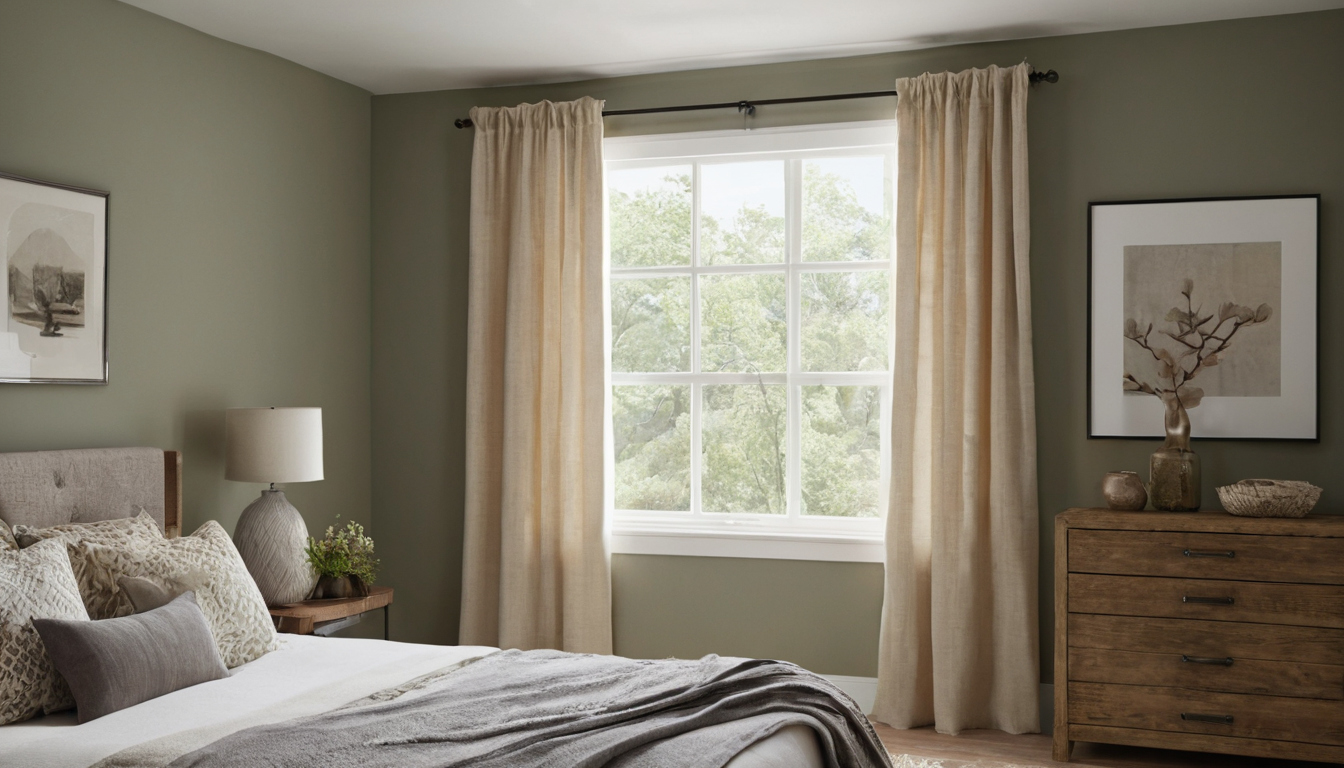
How much do custom bedroom drapery panels cost per width installed.
What is the installed cost per fabric width for custom bedroom drapery?
The combined per-width price breaks down into five verifiable charges on a trade workroom invoice. Specifiers reviewing a quote should match each percentage range against the actual purchase order rather than accept a lump sum.
- Face fabric: 30 to 45 percent of the total per-width cost. Net trade pricing for 54-inch wide goods varies by mill and fiber content.
- Lining: 15 to 25 percent. Standard cotton sateen falls at the lower end; three-pass blackout lining reaches the upper range because of its heavier weight and additional handling.
- Workroom fabrication: 20 to 30 percent. This covers cutting, joining widths, applying buckram, sewing heading tape, and hemming.
- Hardware: 5 to 15 percent. Traverse tracks, carriers, brackets, and finials spread across the total widths used on the window.
- Installation labor: 10 to 20 percent. Professional hanging rates vary with ceiling height, wall substrate, and travel time within the metropolitan market.
These allocations reflect how mills sell goods and how workrooms cut them. The approach parallels the custom bedroom bedding cost breakdown, where per-yard material charges and per-hour fabrication labor must reconcile before a room scheme goes to production.
Which line items make up the per-width drapery cost?
Billing by the fabric width prevents yardage miscalculations when fullness ratios change during the muslin pass or CFA approval. Mills sell 54-inch wide goods by the yard. Workrooms cut those yards into widths. A finished panel uses multiple widths depending on the specified fullness ratio.
- Two-times fullness: A 50-inch finished panel requires approximately two 54-inch fabric widths.
- Two-and-a-half-times fullness: The same 50-inch finished panel uses roughly two and a half widths, adding a half-width seam and extra yardage.
- Three-times fullness: Heavy velvets or formal pinch pleats often require three widths per 50-inch finished panel, increasing both material and fabrication labor.
With the per-width baseline established, the next budget risk is the material itself: How do face fabric grades and blackout linings change the material cost per width?
How do face fabric grades and blackout linings change the material cost per width?
Face fabric and lining account for 40 to 60 percent of the per-width cost. Standard sateen linings add $15 to $30 per yard, while three-pass blackout linings required for bedrooms increase material weight by 8 to 12 ounces per square yard and raise lining costs to $35 to $60 per yard at wholesale trade pricing.
A single 54-inch finished drapery width at a standard 2.5x fullness ratio uses approximately 2.5 yards of face fabric and 2.5 yards of lining before hem allowances. To calculate the base material cost, multiply that combined yardage by the net price per yard from the CFA approval. Replacing a mid-weight linen at $45 per yard with a silk velvet at $180 per yard changes the face fabric cost for one width from roughly $112 to $450. Lining selection widens that difference. A workroom cutting standard sateen adds $37 to $75 per width. Cutting three-pass blackout adds $87 to $150 per width.
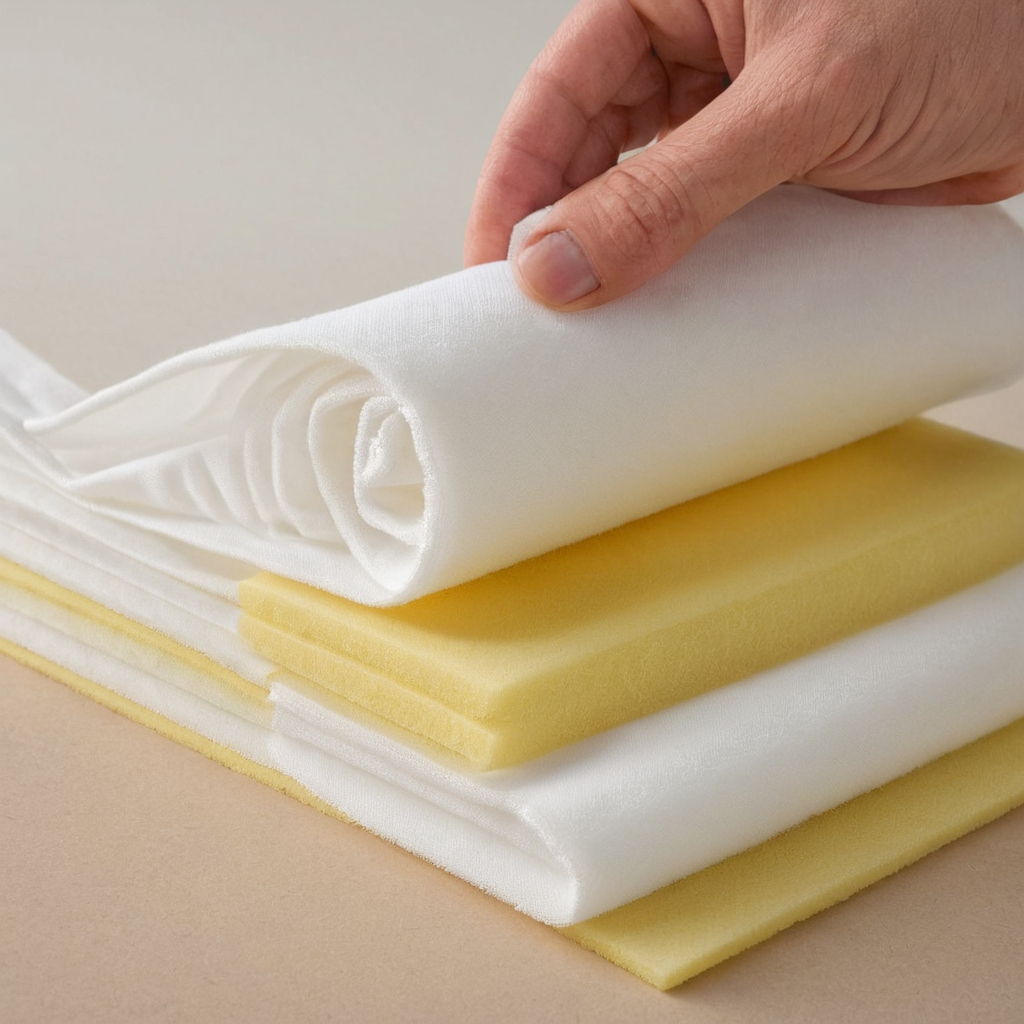
Three-pass construction bonds an acrylic foam layer between two passes of white backing. The foam blocks light transmission completely. That bonded layer also stiffens the hand of the panel. This stiffness requires wider side hems and heavier buckram in the heading to keep the pleats upright rather than collapsing under the added weight. Specifiers who treat blackout as optional in a primary bedroom usually return to replace the panels after the first morning sun gets through a standard sateen liner.
How do face fabric grades and blackout linings change the material cost per width.
- Sheer and lightweight fabrics (under 6 ounces per square yard): Require lightweight linings or self-lining to preserve translucency without adding dead weight to the heading tape.
- Medium-weight fabrics (6 to 12 ounces per square yard): Accept standard sateen or twill linings in the 4 to 6 ounce range for a balanced drape.
- Heavy fabrics (over 12 ounces per square yard): Demand heavyweight sateen or three-pass blackout linings exceeding 8 ounces per square yard to support the face fabric evenly from buckram to floor.
Mismatched weights cause callbacks. The workroom absorbs the labor to re-hem or re-line the panel if the specification error originated on the cutting table. Once the correct lining weight stabilizes the vertical hang, the remaining factor determining the final invoice is the time the sewing operator spends making the heading. How do pinch pleat, goblet, and ripplefold headings affect workroom labor time?
How do pinch pleat, goblet, and ripplefold headings affect workroom labor time?
Workroom labor varies significantly by heading style. Pinch pleat construction requires approximately 1.5 to 2 hours per fabric width for manual buckram insertion and pleat spacing. Ripplefold needs less hand-sewing but requires precise snap-tape application, while goblet pleats add 30 to 45 minutes per width for stiffening and shaping.
Pinch pleat headings are a staple of the drapery trade for a reason. The workroom cuts header buckram to match the finished width, fuses or sews it behind the face fabric, then measures and tacks each pleat by hand. A standard three-finger pinch pleat across one 54-inch fabric width takes a skilled machinist 1.5 to 2 hours at typical trade rates of $65 to $95 per hour. Tighter fullness ratios multiply that time because more fabric compresses into the same header span.
Goblet pleats start with the same buckram foundation but require an extra step. The workroom stuffs each pleat cylinder with batting or cardboard forms, then stitches the base to hold the shape. That finishing step adds 30 to 45 minutes per width. Heavy velvets or stiff linens resist the roll, pushing the time toward the upper end.
Ripplefold headings skip buckram entirely. Instead, the workroom applies nylon snap tape along the top edge, spacing carriers according to the track manufacturer’s specification. Sewing the tape straight without puckering a 54-inch width takes roughly 45 minutes to 1 hour. There is little room for error: a misaligned snap distorts the S-curve down the entire panel drop.
Fabrication time translates into dollars on the quote. Selecting a heading style also requires confirming that the track or rod can carry the resulting weight. What hardware specifications support heavy bedroom drapery loads?

How do pinch pleat, goblet, and ripplefold headings affect workroom labor time.
What hardware specifications support heavy bedroom drapery loads?
Bedroom drapery hung with blackout lining and heavy face fabrics frequently exceeds 3 pounds per linear foot. Standard decorative rods fail under this load. Specifiers must use extruded aluminum tracks rated for residential heavy-duty applications, with carriers spaced no more than 4 inches apart to prevent sagging over spans exceeding 60 inches. For related guidance, review bedroom layout clearances.
Extruded aluminum track systems carry the weight that hollow steel or wood poles cannot. Residential heavy-duty tracks typically support 4 to 6 pounds per linear foot when anchored properly into framing or masonry. Unsupported spans beyond 60 inches require intermediate brackets screwed directly into wall studs or blocking. A track bowing under a velvet panel points to underspecified hardware, not an installation error. Ripplefold headings demand tighter carrier spacing, usually 3 to 4 inches on center, because the S-fold geometry distributes weight across more glides. Pinch pleat panels rely on master carriers and fewer glides, concentrating stress at each pleat point. Match the carrier type to the heading tape before calculating the total hardware cost per width.
How do ceiling height and wall conditions alter installation labor rates?
Installation labor for bedroom drapery is priced per width but adjusted for ceiling height. Hanging at an eight-foot ceiling takes roughly 30 to 45 minutes per width. Ten-foot ceilings require taller ladders, two-person lifts for heavy panels, and more time for alignment, increasing labor costs by 25 to 40 percent. Masonry or plaster walls add drilling time compared to drywall.
How do ceiling height and wall conditions alter installation labor rates.
Drywall over wood studs accepts standard screws quickly. Plaster requires carbide bits and anchors that resist crumbling under the weight of a loaded traverse track. Poured concrete or brick substrates take even longer to drill, requiring hammer drills and masonry anchors for each bracket point. An installer who quotes a flat hourly rate without inspecting the substrate absorbs those extra minutes on every bracket.
Ceiling height adds to the time spent working with the substrate. A ten-foot drop means the installer balances on a taller ladder while driving fasteners into harder material, slowing both positioning and anchoring. Two-person crews become mandatory for wide blackout panels at that elevation, doubling the billed hours for the hang itself. Knowing how ceiling height and wall density change the labor line leads to the next question: how should a bedroom decorator audit a drapery quote against these benchmarks on the workroom invoice?
How should a bedroom decorator audit a drapery quote against these benchmarks?
A bedroom decorator checking a quote must divide the total proposed price by the number of fabric widths specified, then compare each line item with current trade pricing. If the per-width installed cost falls below $300, expect compromised lining or unskilled labor. Quotes exceeding $700 per width require justification through premium textiles, complex architecture, or motorization.
Trade net pricing rarely reaches the client unchanged. Workrooms typically apply a 40 to 60 percent markup from wholesale net to retail billing for fabrication, while installers add a flat fee or hourly rate. Check the proposal for these red flags:
- The quote lists panels instead of fabric widths, hiding the actual yardage used.
- Lining is described as “blackout” without specifying three-pass acrylic suede or dimout construction.
- Heading labor appears bundled with hardware costs rather than listed separately as workroom time.
- Installation labor omits ceiling height, wall substrate, or scaffolding requirements.
- CFA approvals and muslin passes are missing from the scope for patterned or high-value face fabrics.
Reject any estimate that fails to separate material, workroom labor, hardware, and installation into distinct line items. Approve quotes where the per-width math matches verified trade rates, and send back proposals that hide the count.
For more on this topic, see other guides on this site.